
One mainspring barrel holds only so much energy, and a watchmaker who wants more hours has a straightforward option: use two. Twin barrels, two mainspring barrels in a single movement, are how watches stretch past the ordinary day and a half of reserve into multi-day territory. They are also about more than just hours. Two barrels can deliver their energy more evenly than one, which is half the battle in keeping a mechanical watch accurate. (Barrels themselves have their own page.)
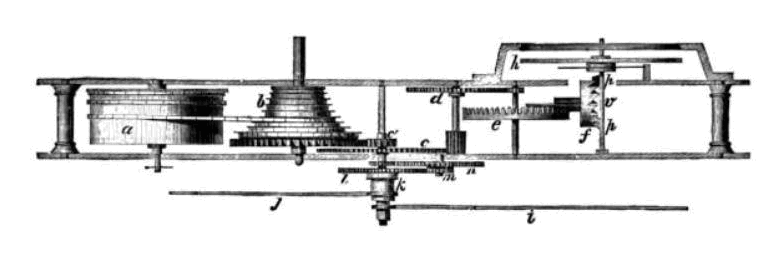
A pocket watch movement with its mainspring barrel on display. The quest for more hours is older than the wristwatch. Photo: Wikimedia Commons, public domain.
Why one barrel is not enough
A single barrel is a compromise. Make the mainspring longer and you get more hours, but a long spring in a small barrel coils tightly and delivers its power unevenly, strong when fully wound and fading as it unwinds. That fading torque is the enemy of accuracy, since the escapement keeps better time with a steady push. Two barrels attack both problems at once: more total spring to draw from, and each barrel working in a narrower, more consistent part of its range. The cost is space. Two barrels take up real estate that could have gone to a slimmer movement, which is why you find them in watches that chose hours over thinness.
Series vs parallel
There are two ways to hook the barrels together, and they do different things. In series, the barrels are coupled end to end: the first barrel drives the second, which drives the gear train. The torque stays that of a single barrel, but the duration doubles, which is exactly what you want for a long power reserve. In parallel, both barrels drive the center wheel together. The duration stays the same but the torque doubles, which suits watches that need more muscle rather than more hours, like some chronographs and repeaters. Most of the multi-day watches people actually buy use series barrels. Panerai’s P.9000 family, for example, runs two barrels in series for a full three days of reserve, the practical sweet spot for a watch you take off on Friday and pick up on Monday.
How far it goes
Once you accept two barrels, there is no law against three. Panerai built its in-house reputation on long reserves, from the three-day P.9000 family up to the eight-day P.2000 family, and other brands have pushed further: week-long reserves are common in high-end manufacture calibers now, and the extreme end runs to a month. Every extra day costs diameter, thickness, or both, and past a certain point the power reserve indicator becomes a complication in its own right, since nobody can remember how many days are left. The twin barrel remains the sensible middle of all this: enough hours to matter, not so many that the watch becomes a science project.
Why it matters
Twin barrels matter because they are the honest answer to the most practical question in mechanical watchmaking: how long will it run? Not accuracy, not beauty, just hours. A watch with a three-day reserve forgives the weekend you forgot it in a drawer. A watch with eight days forgives a vacation. It is unglamorous engineering, two springs instead of one, and it delivers the thing owners actually notice: a watch that is still running when you come back to it.
Thanks for reading this.

