
Raymond Weil founded his own watch company in 1976 in Geneva, at the age of fifty, in the middle of the Quartz crisis. He had just been let go from Camy Watch, the company where he had spent twenty-six years and eventually run the whole operation, and he started selling his own designs off a folding bridge table at a Geneva stall. That image sticks with me because it is so much less glamorous than how watch brands usually talk about themselves, and also because it is exactly the kind of thing I would never have the guts to do. The co-founder was Simone Bédat, a colleague from Camy. The pitch was simple and has not really changed: nice Swiss watches that do not require you to be rich.
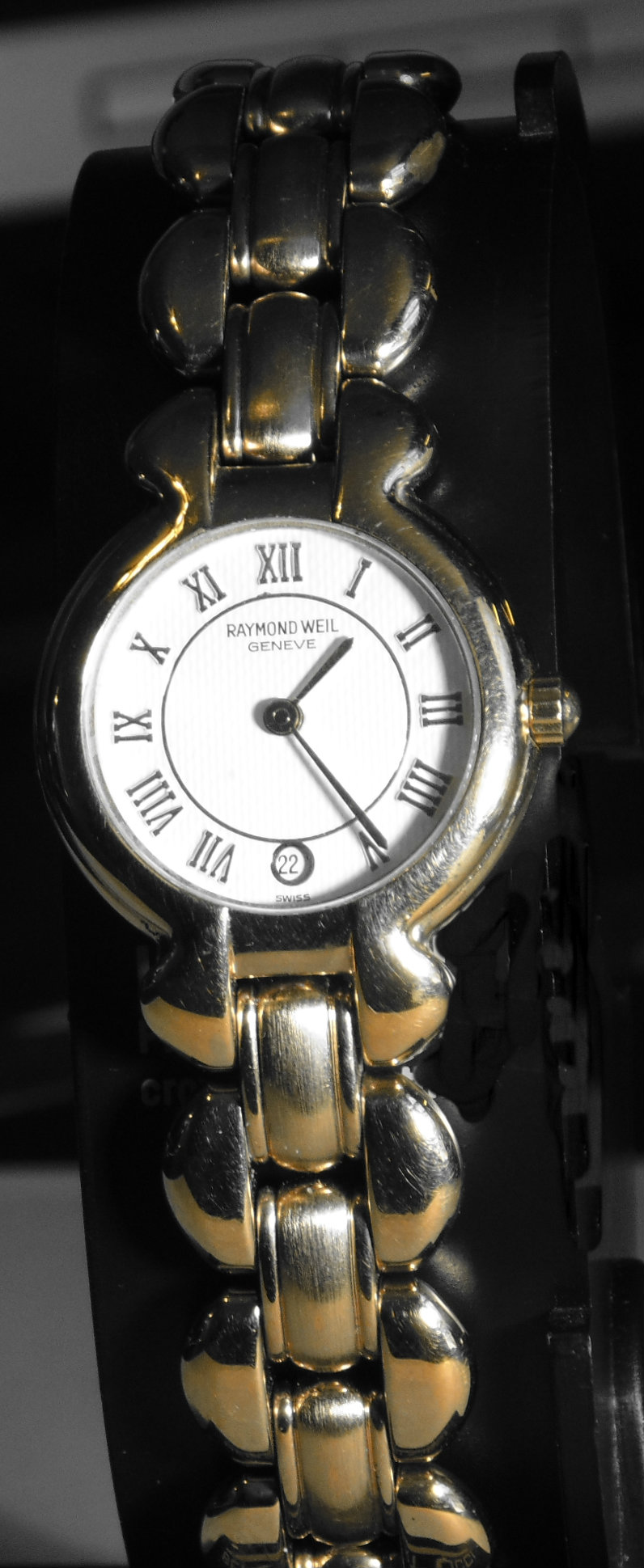
A Raymond Weil ladies’ dress watch (model 5355). Photo: Wikimedia Commons, CC BY-SA 3.0.
The founding
Weil was born in Geneva in 1926, got a commerce diploma, and walked into Camy Watch S.A. in 1949. He stayed for twenty-six years, became the manager, and then got pushed out in 1976, which was, to put it mildly, a bad year to be unemployed in Swiss watchmaking. The Quartz crisis had the whole industry in free fall, Japanese quartz watches were eating everyone’s lunch, and established companies were laying people off by the thousand. Weil looked at all of that and decided the thing to do was start a mechanical Swiss watch brand aimed at regular well-dressed people. It sounds like a plan a man invents at the bar after a bad week, but it worked. He marketed toward what the industry delicately calls the lower end of the luxury market, which is a fancy way of saying people who want a Swiss watch and still have a mortgage.
The family takes over
Weil’s son-in-law Olivier Bernheim joined the company in 1982. Bernheim was born in 1954 in Strasbourg, had a law degree, and had worked at Kronenbourg and then Unilever in Paris, which is not the usual resume for a watch executive and maybe why he thought about branding differently than the old guard. He became President and CEO in 1996, stayed in that role for eighteen years, and remains President of the Board today. He is married to Weil’s elder daughter Diana, who is a professional pianist, which explains a lot about the company once you get to the collections. Weil retired in 2002 and died in January 2014 at eighty-seven. In 2014, his grandson Elie Bernheim, who had joined the company in 2006 after graduating from the École hôtelière de Lausanne, took over as CEO. Elie is still in charge, his brother Pierre is a director, and Raymond Weil remains one of the very few independent family-run watch companies in Switzerland. In an industry where family names get sold to conglomerates every decade, that is genuinely worth something.
The collections
From the beginning, Weil named his collections after operas and composers, a habit the company has never shaken. The Amadeus came in 1983, named for Mozart and launched right as Miloš Forman’s film was about to make Mozart very fashionable again, which was either great timing or great luck and I suspect some of both. The Othello followed in 1986 as an ultra-thin watch, the Traviata in 1988, the Parsifal in 1991, and the Tango in 1995, which became one of the brand’s longest-running lines. The Don Giovanni arrived in 1998 with a GMT complication the company’s own research and development department developed in 1999, the same year they patented an interchangeable bracelet system. Freelancer and Nabucco launched in 2007 alongside the slogan “Independence is a state of mind,” which is the kind of slogan only an independent company can use without embarrassment. The Maestro arrived in 2010. More recently, the company introduced the vintage-styled Millésime line in 2023 and the slim manual-wind Toccata Heritage in 2025. Not every line is still around, and some, like the Shine and the Noemia, were clearly aimed at buyers who follow jewelry trends more than watch forums, but the core idea has stayed put: dressy, polished, easy to wear.
The honest part
Now the part where I level with you. Most of its watches run on Swiss movements made by ETA or Sellita, which are good, reliable, workhorse calibres that also power half the watches in this price range. The company made its first proprietary movement, the skeletonized RW1212, in 2017, and the Toccata Heritage runs on a customized Sellita hand-wound calibre, so the engineering ambition exists, but if you are buying a Raymond Weil you are mostly paying for the case, the dial, the finishing, and the name. The prices run from under a thousand Swiss francs to a few thousand, which puts them squarely against Tissot, Hamilton, Longines, and a bunch of microbrands with louder enthusiasts. The resale value is soft, the way it is for nearly everything that is not Rolex or Omega. The designs have never really led the industry anywhere; the brand follows trends more than it sets them, and the heavy rotation of music industry partnerships means a lot of people know the name from concerts and awards shows rather than from the watches themselves. None of that makes them bad watches. The Millésime small seconds won the Challenge prize at the Grand Prix d’Horlogerie de Genève in 2023, which is an award judges do not hand out as a favor, and the recent releases under Elie Bernheim are better looking and more coherent than what the company was making a decade ago.

Another view of the model 5355. Photo: Wikimedia Commons, CC BY-SA 3.0.
Why it matters
Raymond Weil matters because it is proof that a family can hold onto a watch brand for fifty years without selling it, without turning it into a zombie badge, and without forgetting what it was supposed to be. The company turned fifty on 1 October 2026, still run by the third generation, still headquartered in Geneva, still making watches for people who want something Swiss and pretty and reasonably priced. The early Millésime releases and the GPHG win suggest the third generation actually knows what it is doing, which is not guaranteed when companies pass to the grandkids. If you buy one, buy it because you like how it looks on your wrist, not as an investment and not because a magazine told you it was important. Weil started the whole thing at a folding table during the worst crisis the industry had ever seen. The least you can do is be honest about why you want the watch.
Official site: raymond-weil.com
Thanks for reading this.

