
Patek Philippe was founded in Geneva in 1839, which makes it one of the oldest watch companies in the world still operating under its own name. It has been owned by the Stern family since 1932, and it is the last family-owned independent watch manufacture in Geneva. Those two facts explain almost everything about why the brand is the way it is: the history is unbroken, the family never sold, and the rest of the industry consolidated around it. The history below is the history of how an unbroken company became the most famous name in watchmaking.
The two Poles and the Frenchman
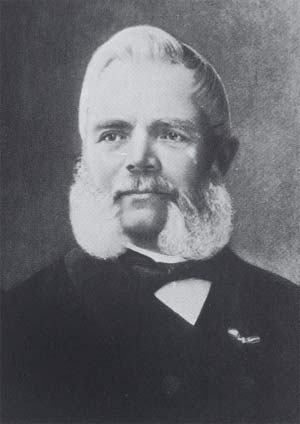
On May 1, 1839, Antoine Norbert de Patek and Franciszek Czapek founded Patek, Czapek & Cie in Geneva. Patek was a Polish cavalry officer who had fled his country after a failed uprising against Russian rule, which is a more dramatic origin story than most watch brands can manage. Czapek was the watchmaker, Patek was the salesman, and after five years the two fell out and Czapek left to go his own way.
The break turned out to be lucky. At an 1844 exhibition in Paris, Patek had met a French watchmaker named Jean Adrien Philippe, who had invented the keyless winding crown: the little stem on the side of the watch that lets you wind and set it without a separate key. It sounds trivial now, but it killed the winding key, and every watch you have ever owned descends from it. Philippe joined as a partner in 1845, and in 1851 the firm took the name it still carries: Patek Philippe & Cie.
The company specialized in complicated pocket watches for royalty and aristocrats. Queen Victoria was an early client of the keyless watches. In 1868, Patek made what is considered the first Swiss wristwatch, for a Hungarian countess named Koscowicz. They patented a perpetual calendar mechanism for pocket watches in 1889 and built the first double chronograph in 1902. In 1887 they registered their logo, the Calatrava cross, borrowed from a medieval Spanish military order, and it is still on every dial.
The Sterns buy the company
In 1932, in the middle of the Great Depression, Patek Philippe was in trouble, and two brothers named Charles and Jean Stern bought it. The Sterns ran Stern Frères, a dial-making business that already supplied the company, so they knew exactly what they were getting into. It turned out to be one of the best-timed purchases in the history of watches. That same year the company launched the Calatrava reference 96, a plain round dress watch that became the template for every dress watch that followed.
Four Sterns have run the company since: Charles from 1932 to 1958, his son Henri from 1958 to 1993, his son Philippe from 1993 to 2009, and Philippe’s son Thierry, who took over in 2009 and still runs it. Philippe Stern is the one who built the modern Patek. He joined the company in 1963, became general director in 1977, consolidated production in a new manufacture at Plan-les-Ouates in 1996, opened the Patek Philippe Museum in Geneva in 2001, and introduced the company’s own quality seal in 2009 to replace the Geneva Seal. He died on June 14, 2026, at 88, having spent most of his life steering the company from a respected small manufacture to a global institution.
Complications and campaigns
Patek’s reputation was built on complicated watches long before the sports models showed up. They made their first perpetual calendar wristwatch in 1925. After the war they cleaned up at the Geneva Observatory precision competitions. For the company’s 150th anniversary in 1989 they built the Calibre 89 pocket watch, with 33 complications and 1,728 parts, the most complicated portable mechanical watch in the world at the time. For the 175th anniversary in 2014 they built the Grandmaster Chime, and in 2019 a steel version of it sold at the Only Watch auction for CHF 31 million, the most expensive wristwatch ever sold at auction.
The other pillar of the modern brand is marketing, and the honesty rule applies here: Patek’s marketing is genuinely brilliant and slightly unnerving at the same time. In 1996 the company launched the “Generations” campaign, with the tagline “You never actually own a Patek Philippe. You merely look after it for the next generation.” It reframed the watch as an heirloom instead of a purchase, which is an extraordinarily effective way to make someone feel good about spending a fortune. Thirty years later the campaign is still running, and it worked so well that the whole industry copied it.
The steel sports watches
In 1976, at the height of the quartz crisis, Patek did something that looked insane: it released a luxury sports watch in stainless steel, designed by Gérald Genta, priced higher than many of the company’s own gold watches. The Nautilus reference 3700/1A, with its porthole case and integrated bracelet, proposed that a steel watch could be a luxury object. At the time nobody was sure. In retrospect it was one of the most consequential launches in watch history.

The original Nautilus ref. 3700/1A of 1976, Gérald Genta’s steel luxury sports watch. Photo: Wikimedia Commons, CC BY-SA 4.0.
The Aquanaut followed in 1997, a more casual sports watch on a rubber strap. But the watch that ate the brand’s identity was the 2006 Nautilus ref. 5711/1A, with its blue gradient dial. Demand outran supply so completely that authorized dealers built multi-year waiting lists, buyers submitted to interviews about their finances and collecting history, and the gray market price ran to two or three times retail. A steel watch with a date window became the most famous watch on the planet among people who care about such things.

The Nautilus ref. 5711/1A, made from 2006 to 2021, the watch that became the brand’s identity. Photo: Wikimedia Commons, CC BY-SA 4.0.
Then came the circus. In January 2021 Patek discontinued the 5711, replacing it with a white gold 5811. That December, to mark 170 years of partnership with Tiffany & Co., the company made 170 Tiffany Blue dial 5711s, sold exclusively through Tiffany’s boutiques for $53,635. One was auctioned by Phillips with all proceeds going to The Nature Conservancy, and it sold for $6.5 million, one of the ten most expensive wristwatches ever sold at auction. Nothing about that number has anything to do with the watch itself. It is a number about the brand, and about what happens when you tell people for twenty-five years that they cannot have something.
In 2024 Patek launched the Cubitus, its first new collection in 25 years: a square 45mm integrated-bracelet watch that was met with a chorus of skepticism about its proportions. That is the risk of the Nautilus business. Once your identity is one steel sports watch, everything new gets measured against it.
Patek today
Thierry Stern has been president since 2009, with Laurent Bernasconi as CEO, and the company makes about 70,000 watches a year, every movement certified to the in-house Patek Philippe Seal, which demands -3/+2 seconds a day, stricter than the Geneva Seal it replaced in 2009. Revenue was reported at $2.05 billion in 2023. The manufacture expanded its Plan-les-Ouates site in 2020, and the company stages enormous “Watch Art” exhibitions around the world. It remains family-owned and independent, which in this industry is nearly extinct.
The honest notes, then. Patek makes some of the finest mechanical watches in the world, and its independence is genuinely admirable, but buying one at retail involves a purchase-approval culture that would embarrass a private bank. The company raises prices regularly while restricting supply, which is its right, and the secondary market does the rest. In 2018 the WWF gave Patek its lowest environmental transparency rating of any major Swiss manufacturer, which sits awkwardly next to the heirloom messaging. And the Generations campaign worked so well that the brand’s image has partly outgrown its watches: a lot of people want the name more than they want any specific watch. None of this makes the watches worse. It just means the hype is part of what you are buying.
Why it matters
Patek Philippe matters because it is the last of its kind: a family-owned Geneva manufacture that survived everything, the quartz crisis, the conglomerates, the fashion cycles, without selling out, and defined what a luxury mechanical watch is supposed to be. The Calatrava is the dress watch other dress watches are measured against. The Nautilus invented the steel luxury sports watch as we know it. The complications work, from perpetual calendars to the Grandmaster Chime, is as good as it gets. If the brand’s image sometimes feels bigger than the watches, that is because the watches earned the image first, and the marketing never let anyone forget it.
Official site: patek.com
Thanks for reading this.

