
Moritz Grossmann is a tiny independent watch manufacturer in Glashütte, Germany, founded on 11 November 2008. It makes roughly 200 watches a year, every one assembled in its own purpose-built factory, and most people have never heard of it, because almost nobody has ever seen one in the wild. The founder is Christine Hutter, a trained watchmaker who worked at some of the biggest names in Glashütte before going out on her own in the middle of the 2008 financial crisis, which is either brave or insane, and possibly both. She built the brand around the name of Karl Moritz Grossmann, a 19th-century Glashütte watchmaker who died in 1885.
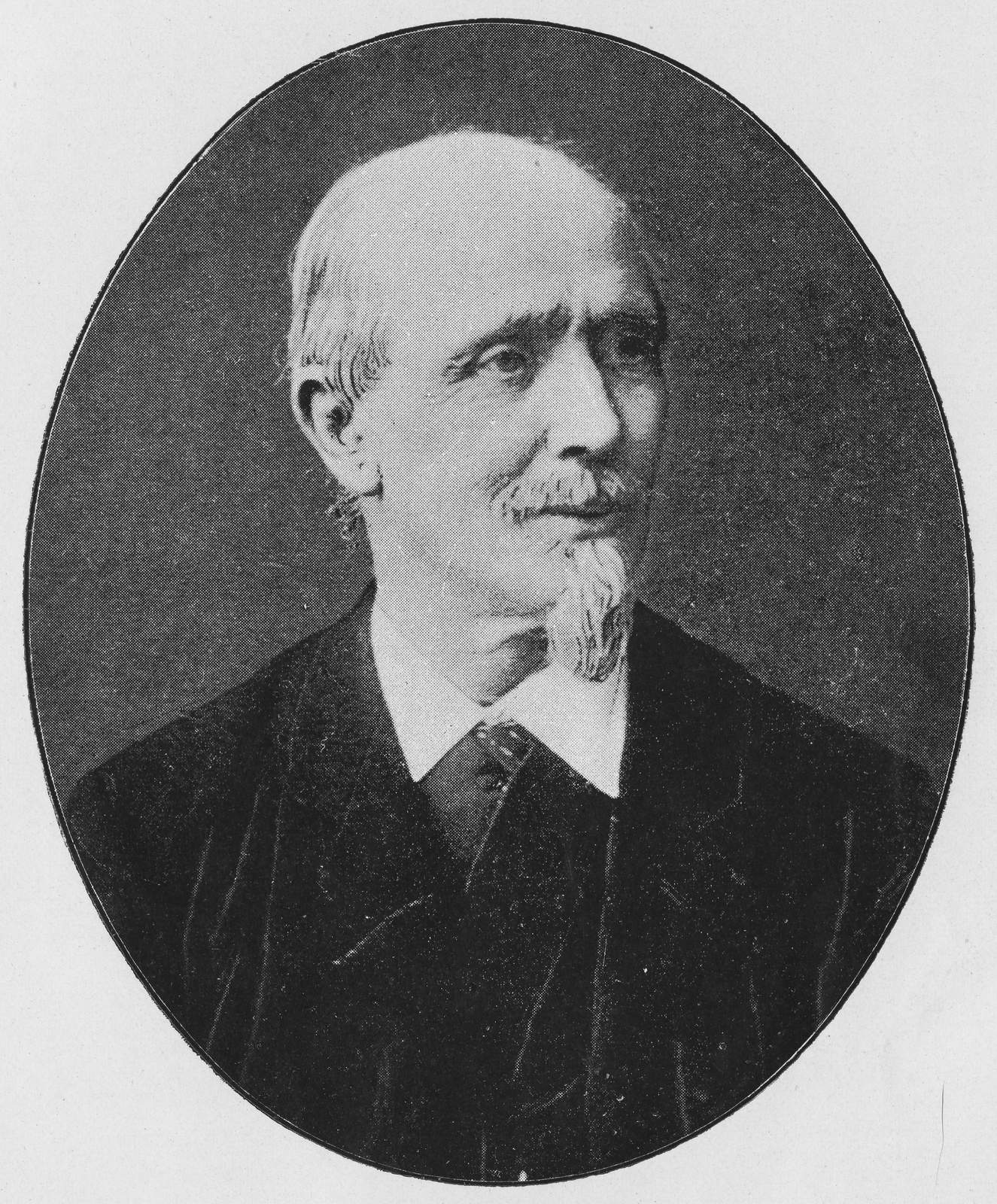
Portrait of Karl Moritz Grossmann (1826 to 1885). Photo: Wikimedia Commons, public domain.
The original Grossmann
Karl Moritz Grossmann was born in Dresden in 1826, and in 1854 his friend Ferdinand Adolph Lange talked him into setting up his own workshop in Glashütte, a tiny town an hour outside Dresden that was turning into the birthplace of German watchmaking. Grossmann became one of the town’s founding horological figures, alongside Lange and Julius Assmann. He was not just a watchmaker; he wrote books and essays on watchmaking, translated foreign technical literature into German, and campaigned for education in the trade. In 1878 he founded the German School of Watchmaking in Glashütte, which more or less kept the town’s craft alive. He died suddenly in 1885, and after that his manufacture was liquidated. The name went quiet for about 123 years.
Christine Hutter
Christine Hutter is a watchmaker by training, which is worth saying plainly because plenty of luxury brand founders are not. She worked at Wempe, Maurice Lacroix, Glashütte Original, and A. Lange & Söhne, then ran a high-horology workshop in Switzerland as managing director of Haute Horlogerie Schindler SA. She came to Glashütte in 1996 and came across the name Moritz Grossmann, and the idea took hold: build her own manufacture on the highest level under his name. With the support of her family, she bought the rights to the name, and in the middle of a global financial collapse she founded Grossmann Uhren GmbH. She started out working from her home in Dresden (one interview says the kitchen, which sounds about right for a startup) and soon moved the fledgling company into a former hardware store in Glashütte. By 2010 the company had 16 employees and had released its first watch. Hutter is one of very few people in this industry who is watchmaker, founder, and owner all at once, and the only one doing it at this level in Glashütte.
Ownership and scale
There is no ownership drama here, which in watchmaking is practically a miracle. Moritz Grossmann has never been sold, folded into a group, or rescued by private equity. It is still independent, privately held, backed by Hutter’s family and a group of private watch enthusiasts who supported the project from the start. In 2013 the company finished building its own manufactory overlooking Glashütte, and it now employs about 46 people who make roughly 200 watches a year. Do the math and you see the fragility: this is a company with no conglomerate money, no safety net, selling very expensive watches in tiny numbers. That is the deal with true independence. It is real, and it is precarious.

Memorial plaque for Karl Moritz Grossmann in Glashütte, his adopted hometown. Photo: Wikimedia Commons, CC BY-SA 3.0.
Key watches
The first Moritz Grossmann watch was the Benu, released in 2010 with the brand’s first in-house movement, calibre 100.0. The collections take their names from ancient Egyptian deities, which is an eccentric choice for a German manufacture and apparently nobody told them to knock it off. The Benu grew into a family: the Benu Power Reserve, and the Benu Tourbillon, which has a patented stop-seconds mechanism made with a tiny brush of human hair and a three-minute tourbillon. If that sounds like a party trick, it kind of is, but it is also genuinely inventive, and the finishing on the movement, with its hand-engraved balance cock, does the talking.
The Atum and the slim Tefnut followed, with the Tefnut Lady hiding a novel winding mechanism inside the strap attachment at 6 o’clock. Then in 2018, for the brand’s tenth anniversary, came the Atum Hamatic, its first automatic watch, and a strange one: instead of a rotor, the calibre 106.0 winds with a pendulum-style hammer, reviving an idea from 18th-century pocket watches that goes back to Breguet’s era. It is less efficient than a rotor and harder to build, which is exactly why nobody else does it. In 2021 the Tremblage marked the brand’s 13th year with a German silver dial finished in the tremblage engraving technique, where a single dial takes an engraver several days, and the historic “M. Grossmann” logo styled as it looked in 1875. The Corner Stone is the brand’s first rectangular watch, with a new calibre 102.3 built specifically for the case.
Why it matters
Moritz Grossmann is one of the last true independents in Glashütte: a woman-owned, privately funded manufacture with 46 people doing everything in-house, from building movements to making hands by hand. The watches are legitimately excellent, and the hammer-wound Hamatic is the kind of stubborn, impractical, wonderful idea that only a company this size could attempt. Here is the honest part. The prices are high for a name almost no one recognizes. Two hundred watches a year means you will probably never meet an owner, and good luck finding one to try on. The heritage story, for all that it is rooted in a genuinely important historical figure, is a revival: a 123-year gap separates Grossmann’s death from Hutter’s founding, with no continuous line and no old movements to reference. Buyers looking for unbroken history will need to look elsewhere. But if you want a small group of people making watches at the highest level because they care, with no group money propping them up, this is exactly it. That counts for a lot.
Official site: grossmann-uhren.com
Thanks for reading this.

