
Greubel Forsey is a Swiss watch company founded in 2004 by Robert Greubel and Stephen Forsey, based in La Chaux-de-Fonds. It makes extreme haute horlogerie, mostly built around the tourbillon, at a pace of well under 200 watches a year. Average prices once sat above CHF 350,000, and the famous Hand Made 1 retails for more than $900,000, which means the entire annual output could fit in a modest apartment and almost nobody reading this will ever own one. That includes me. The honest question hanging over the brand is whether multi-axis tourbillons are engineering or theater, and the brand’s best answer is that its watches have won actual chronometry competitions.
Two watchmakers, one obsession

Robert Greubel (left) and Stephen Forsey. Photo: Wikimedia Commons, CC BY-SA 3.0.
Robert Greubel is French, from Alsace, and had worked at IWC on the 1990 Grande Complication. Stephen Forsey is English, trained at WOSTEP in Neuchâtel, and had done restoration work at Asprey in London. They met in 1992 at Renaud & Papi in Le Locle, the grand complications atelier that doubled as a finishing school for the generation of independents (the Grönefeld brothers, Andreas Strehler, and others passed through the same doors). In 1999 the two went independent, and in 2001 they founded Complitime SA, a company that built complicated movements for high-end Swiss brands. Their own brand launched at Baselworld in 2004 with the Double Tourbillon 30°, a tourbillon cage inclined at 30 degrees rotating inside a second cage, aimed at averaging out the positional errors gravity causes in a wristwatch. It was a debut that said everything about the company to come: wildly ambitious, technically serious, and priced for about forty people on Earth.
Richemont comes calling (and leaves)
In 2006 the brand collaborated with Harry Winston on the Opus 6, and the same year Richemont bought a 20 percent stake in the company. The conglomerate money came with no obvious interference that anyone could see, and Greubel Forsey spent the next decade and a a half doing what it does: inventing complications and winning prizes. In 2007 Greubel and Forsey bought a 17th-century farmhouse in La Chaux-de-Fonds and built a modern manufacture hall right behind it, the old soul and the avant-garde heart of the company standing in the same yard. In 2008 they co-founded the Time Æon Foundation with Philippe Dufour and Vianney Halter, dedicated to preserving hand craft skills that only a handful of people still possess.
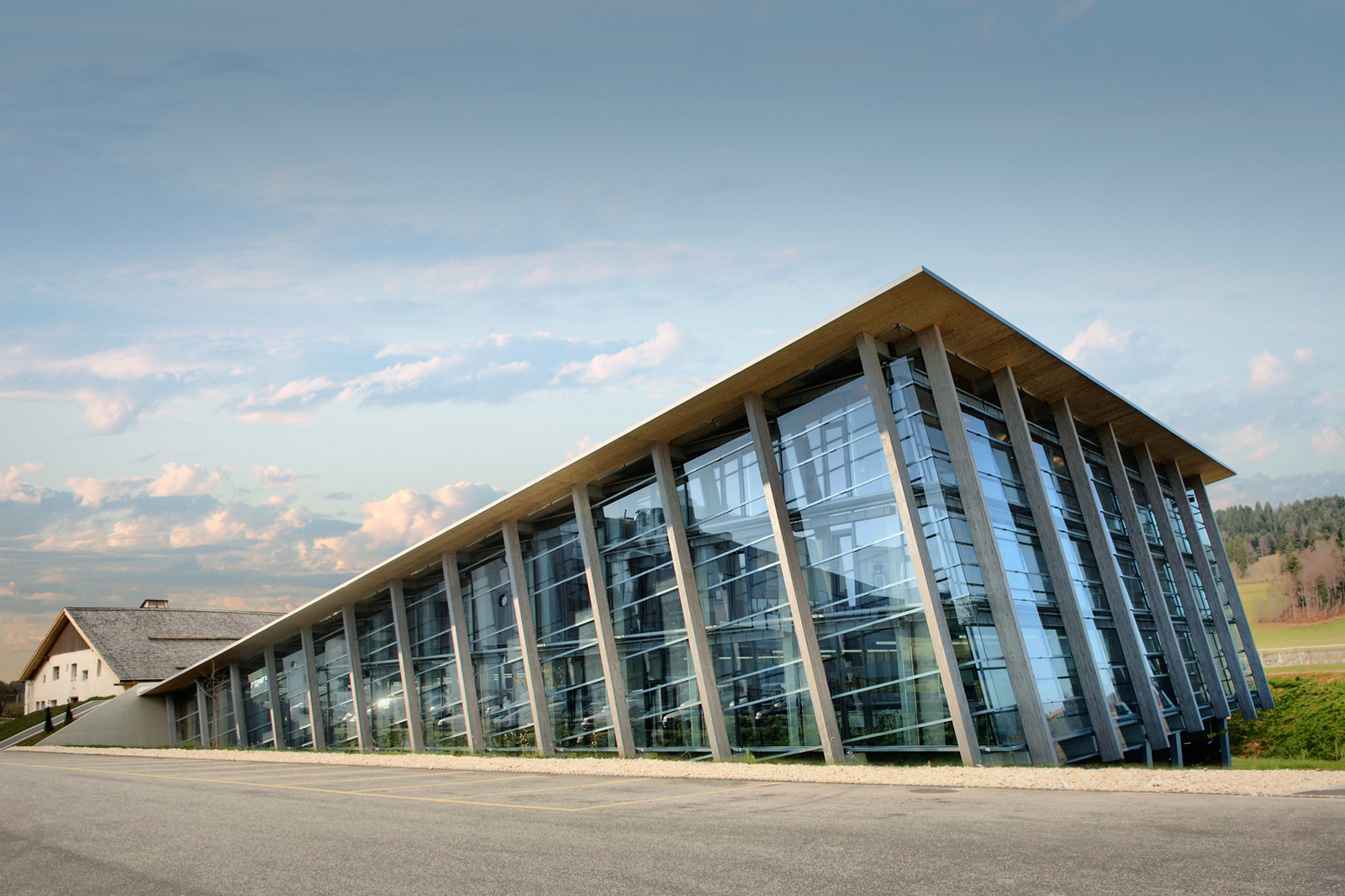
The Greubel Forsey manufacture, built behind a 17th-century farmhouse in La Chaux-de-Fonds. Photo: Wikimedia Commons, CC BY-SA 3.0.
The Richemont era ended in March 2022, when the founders and CEO Antonio Calce bought back the 20 percent stake and took the company fully private and independent. Calce had taken the reins at the end of 2020 with a plan to grow production from under 100 watches a year toward several hundred, open more boutiques, and push average prices from CHF 350,000 toward CHF 1 million. Two years later he was out, and the expansion plan went with him. Michel Nydegger became CEO in August 2024, and the company now produces fewer than 200 pieces a year with about 130 employees. Then came the ugliest chapter yet: in May 2026, Stephen Forsey was fired by the company he co-founded, his employment terminated over a strategy dispute with the board. He resigned from the boards of the company and its foundations but remains a shareholder, while Robert Greubel holds the majority stake. A co-founder getting pushed out of his own manufacture is about as bleak as brand news gets, and it happened at a company whose whole identity is two men and their obsession.
The inventions
The brand organizes its history around what it calls Fundamental Inventions. The Double Tourbillon 30° came in 2004, the Quadruple Tourbillon (two double tourbillons linked by a spherical differential, four cages total) in 2005, and the Tourbillon 24 Secondes in 2010, a single cage inclined at 25 degrees spinning once every 24 seconds, with 85 parts weighing a combined 0.469 grams. The GMT arrived in 2011 with a rotating three-dimensional titanium globe for world time, the first Greubel Forsey complication that was not a tourbillon. The Double Balancier 35° at SIHH 2012 was the first Greubel Forsey watch with no tourbillon at all. The Grande Sonnerie, with 935 components and 11 years of research and development behind it, is the most complex watch the brand has ever made.

The Quadruple Tourbillon à Différentiel: two double tourbillons, four cages, one spherical differential. Photo: Wikimedia Commons, CC BY 3.0.
Then there is the Hand Made 1, which is less a watch than a dare: 95 percent of it, including the hairspring, is made with hand-operated tools alone, each one takes about 6,000 hours to build, and they make two or three a year. It won the GPHG Men’s Complication prize in 2020. In 2024 the brand marked its 20th anniversary with the Nano Foudroyante EWT, an experimental flying tourbillon in a 37.9mm case, the smallest the brand has ever made, with a foudroyante seconds hand driven by just 16 nanojoules per jump. The production version followed in October 2025 as a 22-piece edition and won the GPHG Mechanical Exception prize that year. The trophy cabinet holds seven GPHG awards in total, including the Aiguille d’Or in 2010 for the Double Tourbillon 30° Édition Historique and again in 2015 for the Tourbillon 24 Secondes Vision. The 2010 edition also won the 2011 International Chronometry Competition, which matters, because it means the multi-tourbillon program has survived actual timing trials and not just photo shoots.
Where things stand
Greubel Forsey today is a fully independent company owned by its founders, producing fewer than 200 watches a year from its La Chaux-de-Fonds atelier, led by CEO Michel Nydegger after the abandoned Calce expansion era. One founder no longer works there. The watches still sell for sums that would buy a house, the finishing is still done by hand to a level almost nobody in the industry matches, and the brand remains the benchmark for what a tourbillon can be pushed to do. Mark Zuckerberg has been spotted wearing the Hand Made 1, which tells you roughly where the clientele lives. For the rest of us, these are watches you read about, not watches you buy, and the brand seems fine with that arrangement.
Why it matters
Most luxury watch brands sell you a story and attach it to a movement. Greubel Forsey does it the other way around: the movements are the story, and the finishing is so extreme that it loops past decoration into something closer to sculpture. The prices are genuinely absurd, and you should not pretend otherwise, but the work behind them is real in a way that survives scrutiny. A double tourbillon inside a quadruple tourbillon inside a $900,000 watch is easy to mock from a desk, and some of the mockery is earned, because the marginal gains in timekeeping over a well-made single tourbillon are the kind of thing only timing machines care about. But the brand has put its watches into chronometry competitions and won, it builds things almost entirely by hand that nearly everyone else builds by machine, and it walked away from Richemont money to stay independent. That combination is rare. It is also, to be honest, a company in a strange moment, with one founder gone and the industry watching to see whether the obsession survives the people who started it.
Official site: greubelforsey.com
Thanks for reading this.

