
Casio is an electronics company that makes watches. That order matters. They did not start with watchmaking tradition and add technology. They started with calculators and treated the watch as another electronic device to engineer. The result is the most democratic watch brand in the world: millions of people wear Casios, most of them cost less than dinner, and they keep better time than watches costing a thousand times more.
The Kashio brothers
Tadao Kashio founded a small manufacturing workshop in Tokyo in 1946, in the wreckage of postwar Japan. His brothers Toshio, Kazuo, and Yukio joined him. Their first success was not watches. It was calculators. In 1957 they released the 14-A, the first compact all-electric calculator, and incorporated as Casio Computer Co.
The brothers had a philosophy, summed up by Toshio’s motto: “creating something from nothing.” They miniaturized. Calculators got smaller, then pocket-sized. By the early seventies they were looking for the next thing to shrink, and the watch was sitting right there.
The Casiotron
Casio’s first watch came in 1974: the Casiotron. It was the first watch with an automatic calendar, adjusting for month lengths on its own. Nobody in Switzerland was doing that. The Swiss were still thinking of the watch as a mechanical jewel. Casio thought of it as a tiny computer, which meant they could add functions the Swiss had never considered: alarms, calculators, world time, sensors, and eventually GPS and Bluetooth.
This is the key to understanding Casio. They never had watchmaking tradition to protect, so they never felt constrained by it. While the Swiss debated whether a date window ruined a dial, Casio was putting a television remote on your wrist.
G-Shock
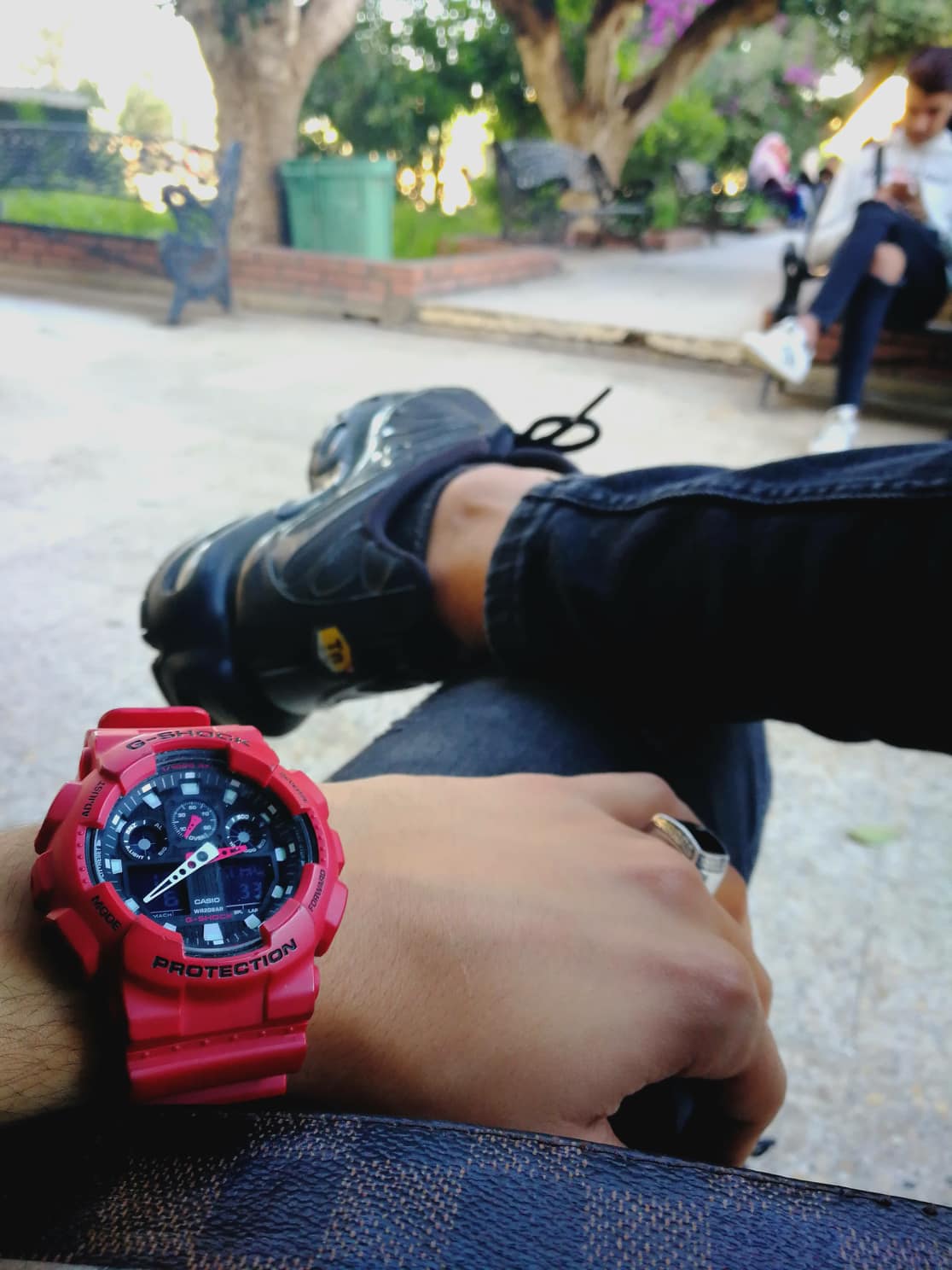
In 1983, Casio engineer Kikuo Ibe built the DW-5000C around a simple brief called “Triple 10”: survive a 10-meter drop, 10 bar of water resistance, 10-year battery life. He reportedly tested prototypes by dropping them out of a bathroom window. The watch had a floating module inside a resin case, and it was genuinely hard to kill.
It sold slowly at first. Japan did not know what to do with it. Then American skaters and hip-hop kids adopted it in the nineties, and G-Shock became a cultural object. Today it is a universe: the square 5000 and 5600 models, the Frogman divers, Mudmasters, Rangemen, full-metal versions, and the MR-G line at the top, which puts hand-finished metal G-Shocks in the same price bracket as Swiss luxury. A $20 resin square and a $3,000 titanium one, same DNA.
The cheap ones
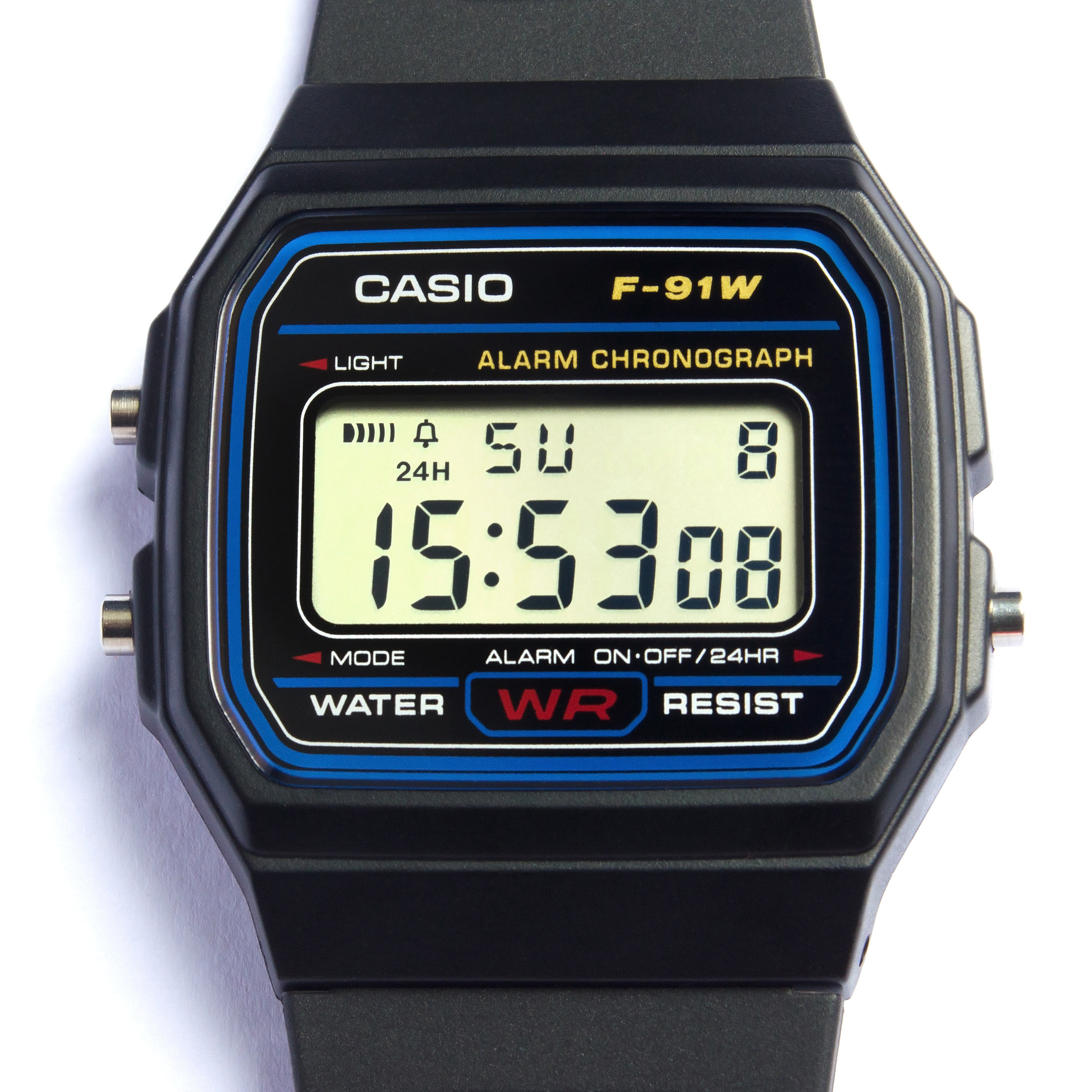
The F-91W costs around twenty dollars. It has an alarm, a stopwatch, a backlight, and a battery that lasts years. It is more accurate than any mechanical watch ever made. It is worn by soldiers, students, and at least one world leader. There is a whole internet subculture dedicated to it.
This is Casio’s real achievement. Not the G-Shock, not the technology. The fact that for the price of a pizza, anyone on earth can own a watch that works. The luxury industry sells timekeeping as aspiration. Casio sells it as infrastructure.
The weird years
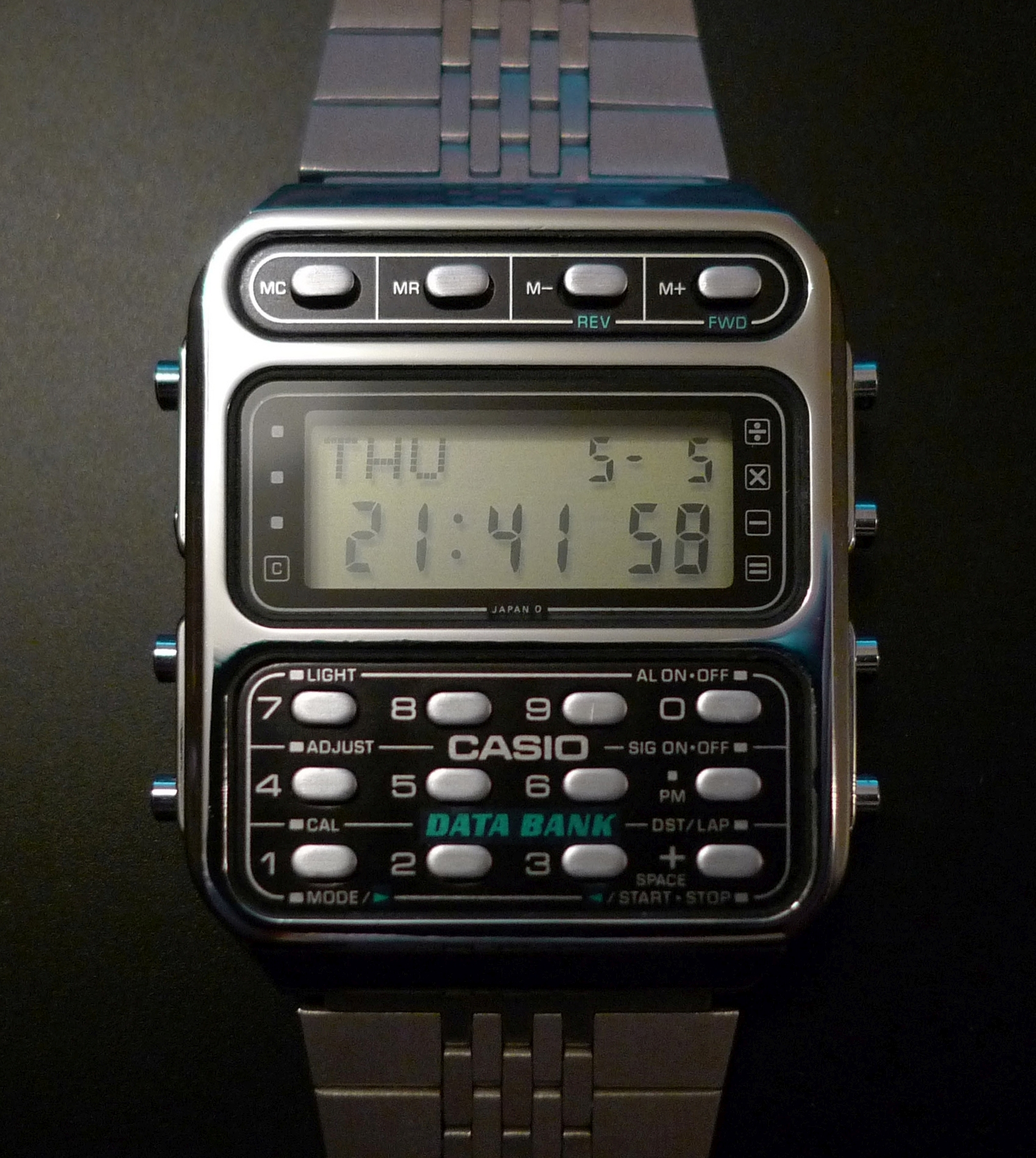
The nineties were Casio’s experimental phase, and it got strange. Calculator watches. Databank watches that stored phone numbers. Watches with cameras, MP3 players, GPS, TV remotes. Most of them were terrible. All of them were interesting. No Swiss brand would have dared. Casio did not have a reputation to protect, so they tried everything.
Today
Watches are now Casio’s biggest business, around two-thirds of total revenue. The company that started making calculator parts in 1946 makes most of its money from timepieces. The lineup spans the twenty-dollar digitals, the Pro Trek outdoor instruments, the Edifice racing-styled analogs, and G-Shock in all its forms.
Why it matters
Casio broke the link between price and function. A cheap quartz Casio tells time better than a handmade mechanical watch that costs as much as a car. That fact makes some people in the hobby uncomfortable, which is exactly why it is worth saying. The luxury watch is jewelry that happens to tell time. The Casio is a timekeeping instrument that happens to cost nothing. Both are valid. Only one of them is honest about what it is.
Official site: casio.com
Thanks for reading this.

